
Sim racing has evolved into one of the most technically demanding and immersive forms of gaming. In 2025, realism is no longer just about sharp graphics, it is defined by physics accuracy, tyre modelling, force feedback, and how closely a title replicates real-world driving conditions. Whether you are a casual enthusiast or an aspiring esports driver, choosing the right simulation can significantly shape your experience behind the virtual wheel.
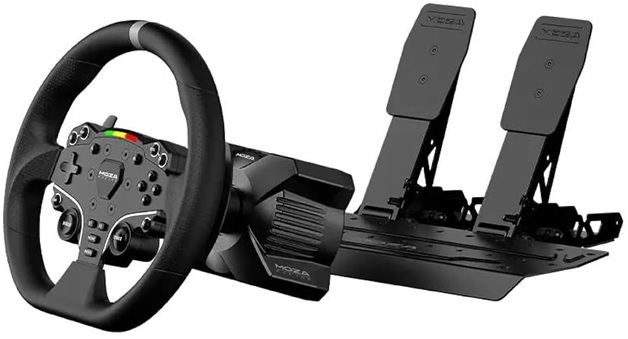
For many players building their setup, hardware plays a crucial role in unlocking that realism. Pairing advanced software with responsive equipment, such as the Moza R3 bundle—allows drivers to feel subtle road textures, weight transfer, and braking dynamics with far greater precision. This synergy between software and hardware is what defines modern sim racing at its best.
What Defines Realism in Sim Racing Today
Before exploring specific titles, it is essential to understand what makes a racing simulator truly realistic in 2025.
Physics and Vehicle Behaviour
Modern sims rely on complex physics engines that simulate tyre grip, suspension movement, and aerodynamic forces. Realism lies in how cars respond to throttle inputs, braking pressure, and changing track conditions.
Laser-Scanned Tracks
Top simulators now use laser scanning technology to recreate real-world circuits down to millimetre accuracy. Every bump, kerb, and elevation change contributes to immersion.
Dynamic Weather and Track Evolution
Realistic titles simulate evolving track conditions. Rubber build-up, temperature shifts, and rain all affect grip levels, requiring drivers to constantly adapt.
Force Feedback Integration
High-quality force feedback translates virtual driving into physical sensation. With setups like the Moza R3 bundle, drivers can detect understeer, oversteer, and surface changes with remarkable clarity, making every lap feel authentic.
The Leading Realistic Sim Racing Titles in 2025
iRacing
Widely regarded as the benchmark for competitive sim racing, iRacing continues to dominate in 2025. Its subscription-based model supports constant updates, ensuring accurate car data and track fidelity.
What sets iRacing apart is its structured online racing system. Drivers compete in ranked sessions, promoting fair play and skill progression. The tyre model has also seen major improvements, delivering more predictable yet nuanced handling.
Assetto Corsa Competizione
Focused on GT racing, Assetto Corsa Competizione remains one of the most detailed simulations available. Its physics engine excels in replicating tyre behaviour and aerodynamics, especially during endurance races.
The title’s dynamic weather system is particularly impressive. Rain affects visibility, braking zones, and traction, forcing players to adjust strategy in real time.
rFactor 2
rFactor 2 is often praised for having one of the most advanced physics models in sim racing. It offers unparalleled realism in tyre deformation and track interaction.
While its interface may feel less polished compared to newer titles, its depth makes it a favourite among purists who prioritise driving authenticity above all else.
Automobilista 2
Automobilista 2 has matured significantly, blending realism with accessibility. Its diverse car roster—from classic Formula cars to modern prototypes—offers a broad driving experience.
The game stands out for its immersive sound design and environmental detail, creating a strong sense of presence on track.
Le Mans Ultimate
A newer entrant gaining attention in 2025, Le Mans Ultimate focuses on endurance racing. Its attention to detail in day-night transitions, tyre wear, and fuel management adds a strategic layer to the driving experience.
The game appeals to players who enjoy long-form racing and team-based events.
Key Features That Make These Titles Stand Out
Each of these simulators excels in specific areas, but several features consistently define their realism:
- Advanced tyre models that replicate wear, temperature, and grip variations
- Accurate car data sourced from real-world telemetry
- Realistic damage systems affecting performance and handling
- Online competitive ecosystems that mirror professional racing structures
- Continuous updates ensuring evolving accuracy and refinement
These elements work together to create a driving experience that goes beyond entertainment and approaches real-world training simulation.
Choosing the Right Simulator for Your Style
Not every realistic simulator suits every driver. Your choice should depend on your goals and preferences.
Competitive Racing
If structured competition and ranking systems appeal to you, iRacing is the strongest option. Its organised ecosystem provides consistent, high-quality races.
Authentic Driving Feel
For those focused on pure driving realism, rFactor 2 offers unmatched depth in physics and feedback.
Immersive GT Racing
Assetto Corsa Competizione is ideal for players who enjoy GT3 and endurance racing with dynamic weather conditions.
Variety and Accessibility
Automobilista 2 provides a balanced experience, combining realism with a wide range of vehicles and tracks.
Endurance and Strategy
Le Mans Ultimate is perfect for players interested in long-distance racing and team-based gameplay.
The Role of Hardware in Enhancing Realism
Even the most advanced simulator can feel limited without proper hardware. Force feedback wheels, load cell pedals, and stable rigs are essential for translating virtual physics into physical sensation.
Entry-level setups have improved significantly, offering high-quality feedback at more accessible price points. Mid-range bundles, in particular, strike a balance between performance and affordability, making them a popular choice among serious hobbyists.
Investing in reliable equipment not only improves immersion but also helps develop better driving habits. Consistent feedback allows drivers to refine braking techniques, cornering lines, and throttle control with greater accuracy.
The Future of Sim Racing Realism
Looking ahead, sim racing continues to push technological boundaries. Advances in artificial intelligence, real-time physics calculations, and virtual reality are set to further enhance immersion.
Developers are also working closely with motorsport teams to integrate real-world data directly into simulations. This collaboration ensures that virtual racing remains closely aligned with actual racing conditions.
As hardware and software evolve together, the gap between simulation and reality continues to narrow, making sim racing an increasingly valuable tool for both entertainment and professional training.
Conclusion
Sim racing in 2025 offers an unprecedented level of realism, driven by advancements in physics modelling, track accuracy, and immersive gameplay systems. Titles such as iRacing, Assetto Corsa Competizione, and rFactor 2 each bring unique strengths, catering to different driving styles and preferences. Choosing the right simulator depends on whether you prioritise competition, authenticity, or variety. When combined with capable hardware, these platforms deliver an experience that closely mirrors real-world racing, making sim racing more engaging and rewarding than ever before.