
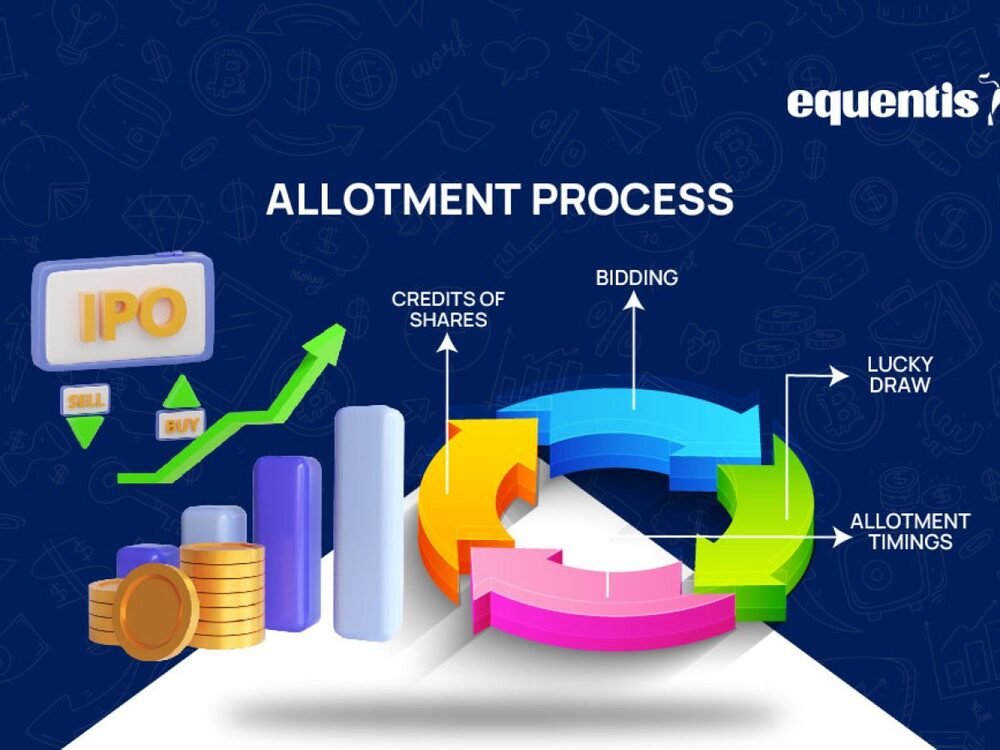
An Initial Public Offering (IPO) allows a private company to raise funds from the public by offering its shares for the first time. When investors apply for an IPO, they expect to get shares that are listed on a stock exchange. However, applying for an IPO does not guarantee that an investor will receive shares. The number os shares allotted depends on investor sentiment, issue size, and category-wise division. Understanding the IPO allotment helps investors know how shares are distributed, when allotment takes place, and how to check their application status.
What Is IPO Allotment?
IPO allotment showcases the process through which a company allocates shares among investors. Once the IPO subscription period closes, the registrar reviews applications, understands payment details, and determines the number of shares. If the IPO receives applications for fewer shares than offered, investors can receive a surplus quantity.
How Does the IPO Allotment Process Work?
The process begins after the subscription window closes. Investors can find various ways to apply through their banks’ Application Supported by Blocked Amount facility or UPI applications. The amount of the application is blocked in the investor’s account rather than being deducted. Once bidding ends, the registrar compiles applications received across different categories and checks their validity. Applications with incorrect information or PAN details might be ignored.
Different Factors of Investors in IPO Allotment
IPO shares are distributed among different investor categories according to the issue structure and protocols. These categories generally include Qualified Institutional Buyers (QIBs), Non-Institutional Investors (NIIs), and Retail Individual Investors (RIIs). QIBs include institutional participants such as mutual funds, insurance companies, and other eligible financial institutions. They receive a designated portion of the IPO, subject to regulatory requirements.
What Factors Affect IPO Allotment?
The main factors that affect IPO allotment include:
- Category-wise reservation and proper distribution of influence.
- Offers more shares for individual applicants and smaller reservation through growing competition.
- Accuracy in applications and avoiding any payment discrepancies.
- Investors should ensure a proper demat account for making payments and have a good CIBIL score.
How to Check IPO Allotment Status Online?
Investors can check their IPO allotment status after the registrar finalises the allotment criteria. To check the status according to the Sensex market, it’s best to go through the registrar’s official website, the BSE website, or the NSE website, where supported. To check the status, investors should add the correct PAN number and demat account details.
Once the details are submitted, the website displays whether the application has received full allotment or no allotment. Successful applicants can also verify the credit of shares in their demat accounts. Investors who do not receive shares should check their bank accounts to confirm that the blocked funds have been released.
What Happens After IPO Allotment?
After the allotment process is completed, shares are credited to successful investors’ demat accounts before the scheduled listing date. Investors who received shares can decide whether to hold them for long-term gains or sell them after listing, depending on financial incentives. The stock begins trading on the designated exchange on the listing date, and its market price may be higher or lower than the IPO issue price.
For faulty applicants, the unused funds are released through ASBA or UPI. In cases of partial allotment, the amount corresponding to the allotted shares is debited, while the remaining blocked amount is released.
Conclusion
The most important stage is an IPO allotment of the public issue process because it showcases how shares are allotted among investors. The allocation depends on investor categories, subscription demand, and regulations. While investors cannot guarantee an allotment in an oversubscribed IPO, submitting accurate applications and understanding the allocation process can help them participate more effectively. Before applying, investors should review the company’s financial performance, business model, valuation, and risk factors rather than making decisions based solely on subscription figures or expected listing gains.