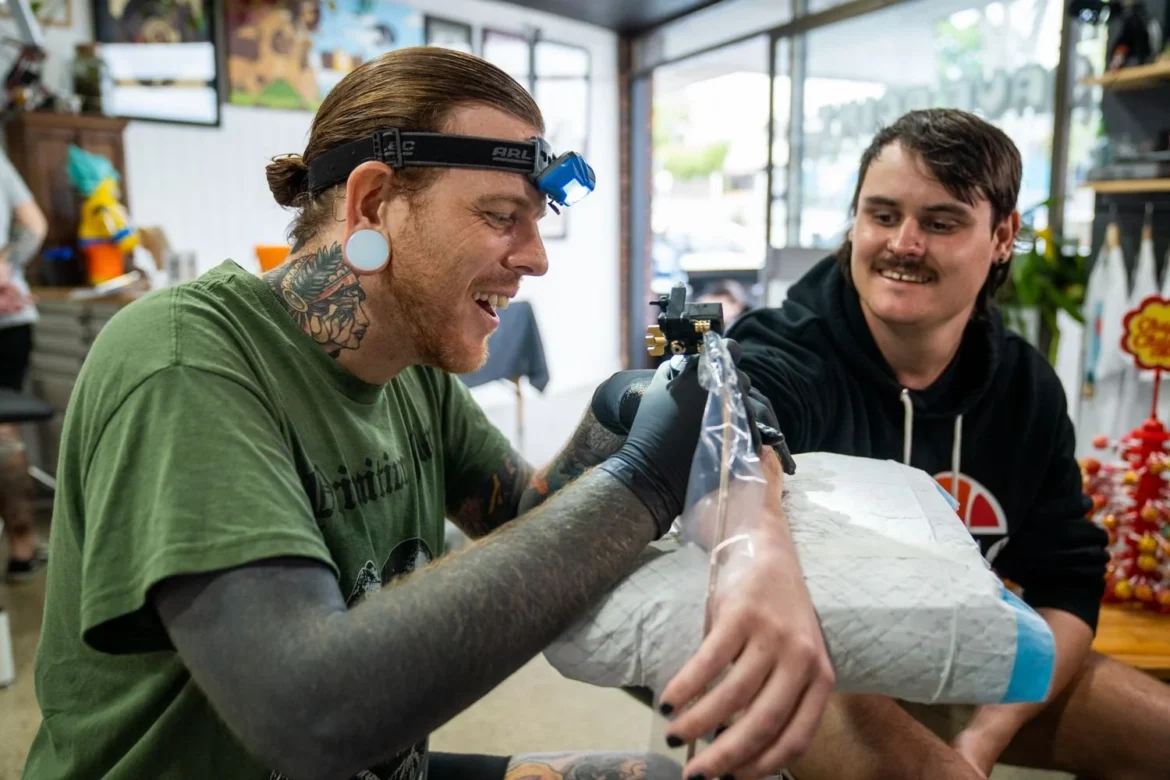
Fine-line tattoos appear like a seamless work of art delicately placed on the skin. Having got a few fine lines over with myself and strolling around the studios of Asia Pacific, like Celebrity Ink, I soon found out that for minimalist designs, technical precision is paramount. With no heavy outlines or shading, every individual needle pass will show.
There’s what I’ve learned to look for before selecting your artist-studio if you are looking for a dainty botanical, micro-script, or subtle portrait.
How Are Fine-Line Tattoos Done Differently from Traditional Pieces?
Fine-line work is tattooed with ultra-thin single needles as well as tight three-needle liners, rather than huge groupings of needles and heavy packing of colour.
- The exact Needle Depth: The artist must penetrate just under the skin’s surface with a certain consistency in hand. No blurs or “blowouts” (ink spreading under the skin) as a result of going too deep, and the ink comes out over time if it is inserted too shallow. The fine line tattoos in Perth or other places know the prospect of traditional tattoos.
- Subtle Dotwork and Negative Space: All rather light strokes of stippling and open skin give the piece breathing room, rather than the solid block of black.
What Should You Look for in a Fine-Line Artist’s Portfolio?
With studio ring lights, anyone can get a small tattoo to look razor-sharp immediately after removing it with a wipe. When vetting an artist for any type of fine line work, I ignore the new photos:
- Always check their “Healed” highlights: Healed Photos (6 months to 12+ months later). Ultra-thin lines will be visible as crisp or faded to gunky gray in the settled fine-line work.
- Consistent Line Weight: See how curves and circles look in their portfolio. Thin, unbroken geometry or delicate lettering shows up as shaky if the artist is shaky. The best tattoo artist from Melbourne oranother place can maintain the line weight.
An honest adviser regarding scale is a great specialist who can tell you whether or not the scale of a complex design will become blurry in time if it is shrunk to 2 centimeters.
Which Body Placements Hold Fine-Line Ink Best?
Before booking your appointment, consider the ability of your skin to move and sun exposure. Crisp and thin lines look great on areas such as the inside of the forearm, upper arm, shoulder,or calf. Zones that experience high friction, such as feet, hands, wrists, and fingers, are shedding zones and will fade more rapidly, so details in these areas may require more frequent touch-ups.
How Should You Care for a Fine-Line Tattoo So It Doesn’t Fade Early?
Fine-line tattoos are incredibly thin and delicate, and since they use less ink and deposit it close to the skin, your aftercare process will significantly impact their crispness and appearance when fully healed:
- Never Smothered, Always Moisturized: Wash lightly with a fragrance-free soap, and apply a thin layer of studio-approved healing balm. Thin lines can scab and get suffocated by a heavy ointment, while pigment is drawn away by the heavy ointment.
- Lock Down Daily Sun Protection: UV penetrates and fades soft pigment quicker than bolder traditional blackwork. When you’re completely healed, using high-SPF sunscreen every time you put your tattoo out will help to retain the crisp edges for years to come. The tattoo places from Bali or other Asian places also offer aftercare services.
Conclusion
Taking your time for fine-line tattoos pays off, and so does doing your research. Resistant to single-needle control issues in healed skin, location, and a good studio with a number of experts (such as Celebrity Ink) are all things you need to check off to ensure your minimalist piece becomes crisp and timeless and will last for years.